
Renters insurance with roommates: what Baytown renters should check
Sharing a rental does not necessarily mean sharing insurance. Learn how belongings, liability, temporary housing, and flood questions change when you have roommates.
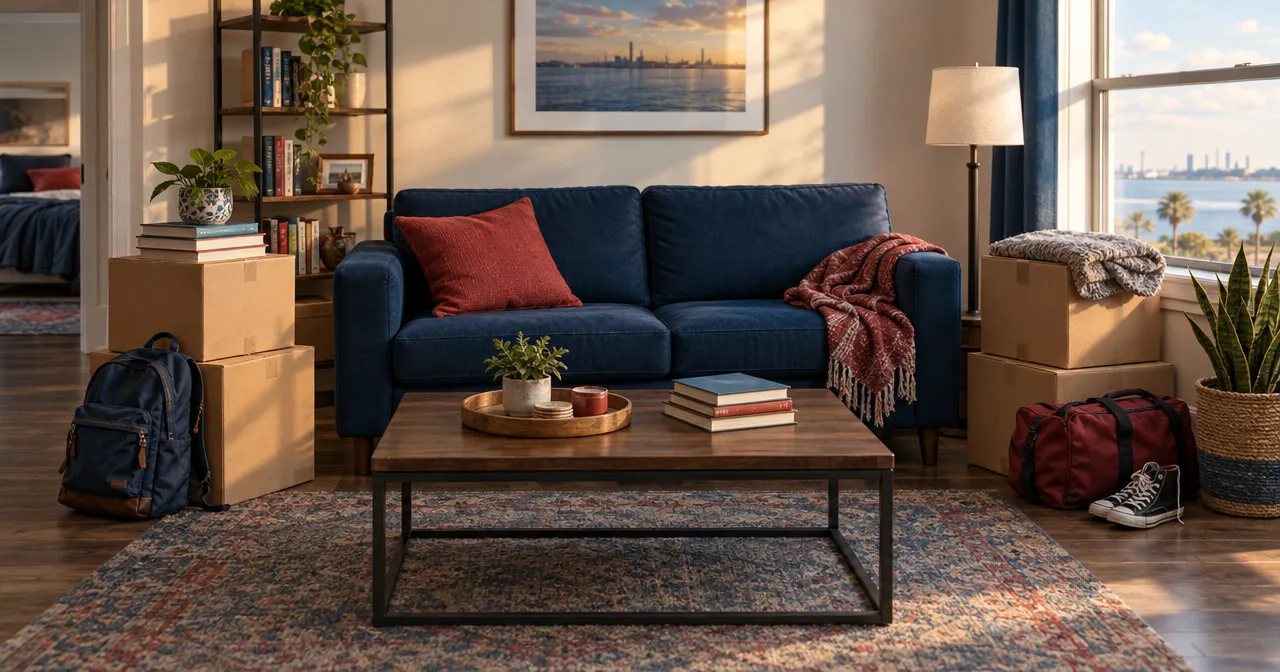
Two people can share an address, a refrigerator, and the monthly rent without sharing the same insurance protection. If you rent an apartment or house in Baytown, Highlands, Crosby, or a nearby community, that distinction is worth sorting out before you need to replace a laptop or find somewhere else to stay after a covered loss.
A renters policy is not one single promise to pay for everything that happens in a rental. The usual conversation has three parts: your belongings, your responsibility to other people, and the extra cost of living elsewhere when a covered event makes the home unusable. The details vary by policy. Sharing the space adds another question: who is actually insured under each part?
Separate the building, the lease, and your belongings
The landlord's insurance and a tenant's renters insurance address different interests. The owner generally insures the building; a landlord's policy does not protect a tenant's furniture, clothes, or electronics. A renters policy can address a tenant's personal property, liability, and additional living expenses, depending on its terms. The Texas Department of Insurance's renters insurance guide is a helpful overview of those categories.
Imagine a kitchen fire in a rented duplex. The owner may have a building claim for damaged cabinets and walls. You and a roommate could each have damaged belongings. If the unit is unlivable while repairs are made, you may also face temporary housing costs. Those are related consequences of one event, but they are not automatically paid by one person's policy or under one coverage limit.
A lease can add another layer. It may require tenants to provide proof of insurance or specify a liability limit. Read its exact language and ask the landlord what proof is acceptable; then compare that requirement with the coverage you actually want. Meeting a lease requirement is not the same as insuring your belongings. TDI warns that a liability-only renters policy does not cover your personal property. If a document says only “renters insurance required,” do not guess what that means for your own protection.
Does a roommate's policy cover you?
Do not assume it does. TDI's guidance on a roommate's renters insurance says your roommate's policy covers their belongings, not yours. If an insurer offers an arrangement that includes more than one roommate, ask whether each person can be named, whose property qualifies, how the limits apply, and what happens when one person moves out.
Consider two housemates: one bought the couch and dining table; the other brought a television, computer, and bike. If only the couch owner's name is on a policy, the computer owner should not count on that policy to replace the computer. The fact that both names appear on the lease or utility account does not itself settle who is insured. Likewise, a roommate who says “we have renters insurance” may mean “I bought a policy for myself.”
Separate policies are often the clearer starting point for unrelated housemates: each person can discuss their own belongings and liability needs and keep their policy when the living arrangement changes. If you prefer a shared policy, request a plain-language explanation of its named insureds, property limits, claims process, and how changes are handled. Do not rely on a casual agreement to split a payout if the policy's terms do not support the coverage you expect.
For items you purchased together—perhaps a couch or kitchen appliances—keep a record of who owns what and ask how a policy would handle jointly owned property. Policy wording, receipts, and the facts of a loss matter more than where the item sits in the apartment.
Estimate your belongings room by room
A renter might picture only the expensive objects: a laptop, television, or bike. The total also includes shoes, clothing, bedding, kitchenware, tools, small appliances, books, and furniture. Walk through each room and record items you would need to replace. Photograph or video them, keep available receipts, and store a copy somewhere you could still access if the rental were damaged. TDI explains how to make a home inventory for this purpose.
Make the list yours, not an unexamined list of everything behind the front door. If your roommate owns the living-room television and you own the desk and computer, note that distinction. If an item was a gift or you no longer have a receipt, describe it as specifically as you can and retain any photos or records you do have. Update the list after a major purchase or move.
Next, compare your estimate with the policy's personal property limit and ask how a covered item would be valued. Actual cash value generally accounts for depreciation; replacement cost terms may pay based on replacing an item with a similar new one, subject to the policy's rules and limits. For a five-year-old laptop, those methods could produce different results. Ask whether you need replacement-cost coverage, whether certain valuables have special limits, and how belongings kept away from home are treated. Do not assume every bike, instrument, or piece of jewelry has the same limit as ordinary furniture.
Understand what liability may—and may not—do
Personal liability coverage addresses certain claims that you are legally responsible for injury to someone else or damage to someone else's property, within the policy's terms. It is not a general repair fund for every accident in a shared rental. For example, if a visitor trips over a rug and alleges that you were responsible, coverage questions may turn on the facts and the policy; nobody can determine the outcome from the phrase “renters insurance” alone.
With housemates, ask a more specific question than “Does the apartment have liability insurance?” Ask whose actions and whose legal responsibility the policy addresses. One roommate's liability protection does not automatically make every other roommate an insured person. Also ask what limit applies, what exclusions matter, and whether a landlord's lease requirement is satisfied. If you work from the rental, keep a pet, or store property belonging to someone else, describe that situation rather than assuming a standard policy fits it. Coverage and eligibility depend on the policy and insurer.
It is useful to separate a loss to your own belongings from a claim made against you by another person. If a pan fire ruins your own cookware, that is a personal property question. If the same incident also damages someone else's property and a claim is made against you, the liability questions may be different. A single event can therefore raise multiple coverage and deductible questions; have your agent explain each one using your actual policy.
If the rental is temporarily unlivable
Additional living expenses, sometimes called loss of use, can help with extra costs of living elsewhere when a covered loss makes a rental uninhabitable, subject to limits and policy conditions. That might include the added cost of temporary lodging or meals beyond your usual spending, not a blank check for every bill after an incident. Ask what triggers the coverage, which records you should keep, and how long and how much the policy will pay. TDI explains when policies pay additional living expenses.
Suppose a covered fire forces both roommates out for a week. Each person should know whether they have their own additional-living-expense coverage, whether an expense is eligible, and whether shared hotel or meal receipts need to be separated. If only one person bought a policy, the other should not assume the first person's temporary-housing coverage applies to both. Limits and the identity of insured people are crucial here.
There is also a cause-of-loss question. A renters policy's temporary housing coverage does not mean every reason for moving out is covered. A planned renovation, a lease dispute, a maintenance problem, and a covered fire are not interchangeable. Ask the insurer or agent to explain the event that triggered your move before relying on a benefit.
Treat flood as a separate question
For a Baytown-area renter, water can enter a home in different ways. A sudden plumbing leak and water rising from outside are not necessarily treated alike. Standard renters policies generally do not cover flood damage; do not use “water damage” as shorthand for every type of event. The Texas Department of Insurance explains that renters can seek flood insurance for their belongings, even though they do not own the building. Ask what counts as flood under a proposed policy, which belongings are eligible, and whether you need separate flood contents coverage.
A landlord's flood policy for the building is not a substitute for a renter evaluating their own possessions. And a flood contents policy is not the same thing as renters liability or ordinary additional-living-expense coverage. If this matters to you, raise it while comparing policies rather than when water is already at the door; availability, effective dates, exclusions, and limits need to be confirmed for your situation.
Compare the deductible and limits with an actual example
A low-looking premium does not tell you how a claim would work. Identify the personal property limit, liability limit, additional-living-expense limit, any special item limits, and the deductible that applies to a property claim. A deductible is the amount you are responsible for before the insurer pays on a covered claim, according to the policy's terms.
For a simple illustration, if a covered personal property loss is $800 and the applicable deductible is $1,000, there may be no payment for that property loss. If the covered loss is larger, the deductible can still substantially affect what you receive. This is arithmetic for illustration, not a claim decision or a recommended deductible. A real outcome depends on the policy, valuation method, exclusions, limits, and documented loss. Ask the agent to work through a sample using the terms of the policy you are considering.
If two roommates each buy coverage, they can choose limits and deductibles that make sense for their own property and circumstances. If they share a policy, ask whether a single limit and deductible apply to the household and how any claim would be documented and paid. Clarity before a loss is much easier than trying to settle ownership and costs afterward.
Seven questions to bring to a coverage conversation
- Who is named on each policy? Does it cover only one renter, or are all intended insureds listed and eligible?
- Whose belongings are included? How are jointly owned items and belongings kept outside the rental handled?
- What would it take to replace my things? Is personal property valued at actual cash value or under replacement-cost terms, and are there special item limits?
- What does liability cover for me? What limit, exclusions, and lease requirements should I review?
- If we have to leave after a covered event, what extra costs qualify? What are the time and dollar limits, and which receipts should we save?
- Which water losses are covered? Does separate flood contents coverage belong in the conversation?
- What happens if a roommate moves in or out? Who should notify the insurer, and when does any change take effect?
You do not need to have every answer before you call. Bring your lease, a rough belongings inventory, and the names of the people sharing the rental. Merling Insurance Agency's Baytown team can talk through renters coverage questions and available options alongside your broader auto, home, and other insurance needs. If you want to compare coverage for your own situation, request a quote or contact the office. This article is general information, not a statement of coverage. Eligibility, terms, and claims depend on the policy and circumstances.